



Aromatics International
Myrrh Essential Oil (Commiphora myrrha) – Organic
Myrrh Essential Oil (Commiphora myrrha) – Organic
Couldn't load pickup availability

Myrrh essential oil is a deeply calming oil that promotes inner harmony and a calming mind , perfect for contemplative practices and evening relaxation. It also soothes and regenerates the skin , helping to maintain its purity, comfort, and natural glow.
Myrrh Essential Oil (Commiphora myrrha)
Certified myrrh essential oil (Commiphora myrrha) has a deep, resinous, balsamic aroma with soft, warm, and subtly spicy notes. For centuries, myrrh has been valued for its calming properties—it helps calm the mind and promotes inner harmony.
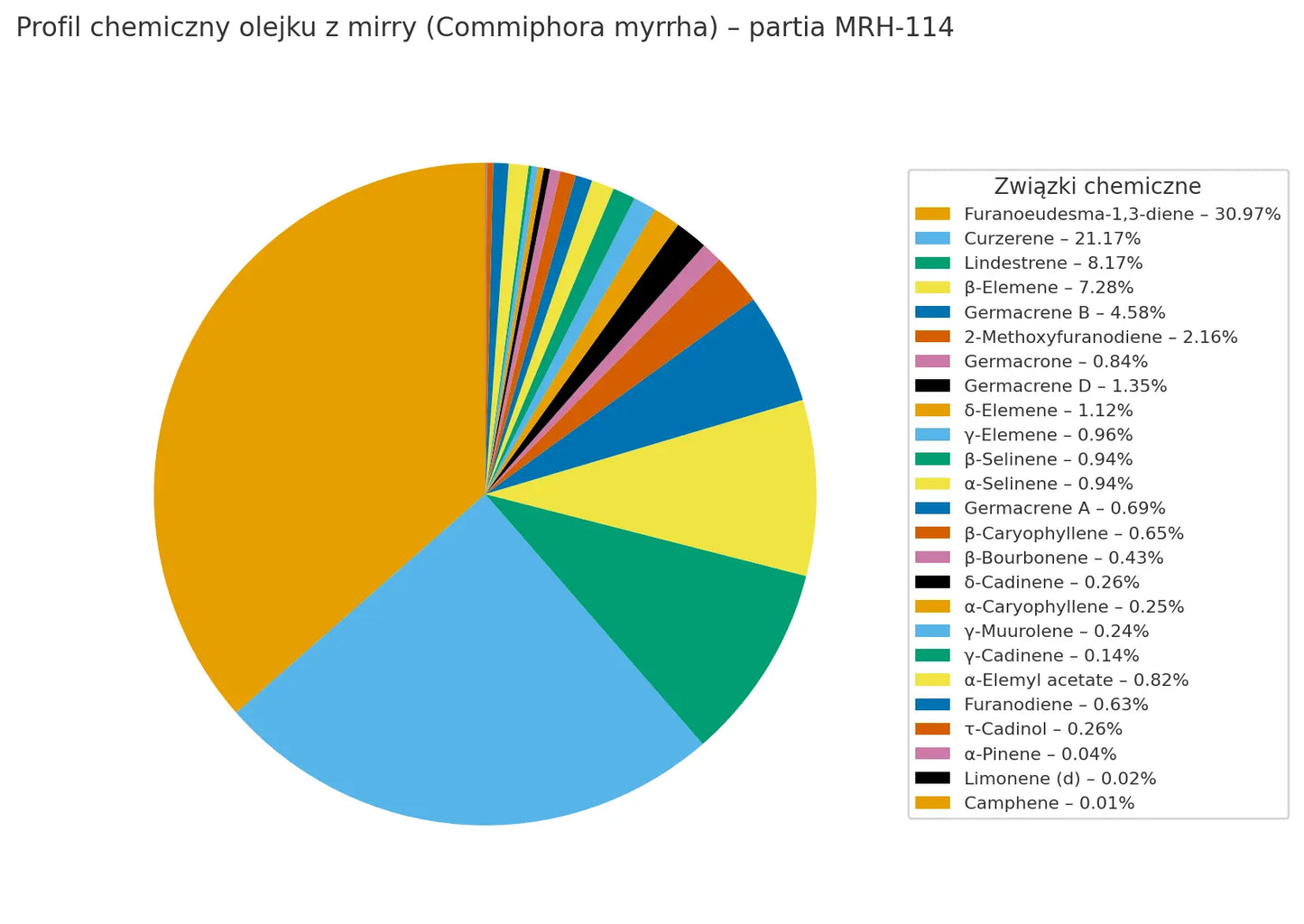
The chemical profile of this batch is exemplary for the highest quality myrrh from Somalia : predominant are furanoeudesma-1,3-diene (30.97%) and curzerene (21.17%), with significant contributions from lindestrene (8.17%) and β-elemene (7.28%). This composition of compounds explains the deep, soothing character of the aroma and its excellent skincare properties (soothing, regenerating, and antiseptic). This is a therapeutic-grade oil, consistent and pure. The proportions of sesquiterpenes and furans are well-balanced – the oil will not be overly heavy, retaining a subtle warmth and a slightly spicy depth.
In skincare, it supports the skin's natural radiance, soothes irritations, and helps limit the growth of microorganisms that can cause imperfections. In daily care, it helps enhance the skin's natural glow and feel comfortable.
Our certified organic myrrh essential oil is hydrodistilled from the resin of small, thorny trees found in the dry, desert landscape of Somalia.
Product properties
- Country of origin: Somaliland
- Plant Part: Resin
- Cultivation: Certified organic
- Groups of organic compounds: Monoterpenes, sesquiterpenes, ketones
- Botanical family: Burseraceae
- Extraction method: Hydro-distillation
Therapeutic and aromatic properties
Therapeutic properties:
- Painkillers
- Anti-inflammatory
- Astringent
- Skin regenerating
- Antioxidant (antioxidant)
Fragrance profile
- Notes: Base note
- Aroma: Resinous, enveloping and radiant, balsamic
Application
Skin Care
Oil Conditioning Ritual: Myrrh supports skin comfort, helps reduce the appearance of redness and enhances the natural radiance of mature skin.
Mood – Calm
The enveloping, balsamic aroma promotes calm and concentration during relaxation practices (yoga, meditation).
Cleansing - Hygiene
Gently promotes the purity of redness-prone skin; when added to an alcohol-free cleanser, it helps soothe unevenness and discomfort.
Durability and safety
Shelf life: 8 years
Safety and warnings:
Non-toxic, non-irritating.
Contraindicated during pregnancy and breastfeeding due to the content of β-elemene and furanodiene, which may have fetotoxic effects (harmful to the fetus).
Aromatic combinations for myrrh oil
- Frankincense – deepens the balsamic, spiritual character of the composition
- Sandalwood – emphasizes the warmth and velvety aroma
- Atlas cedar – adds depth and a dry, woody accent
- Damask rose – gives the composition elegance and softness
- Patchouli – enhances the earthy tones and preserves the scent
- Siamese benzoin – harmonizes and warms the balsamic note
- Vetiver – introduces a grounding, slightly smoky tone
Party Information
- Cultivation: Certified Organic
- Production Date: 2024-01-31
- Shelf Life: 8 years
- Aroma Notes: Base
- Country of Origin: Somaliland
- Batch Number: MRH-114
View the detailed GC/MS report for this oil ( PDF ).
All essential oils available at Aromatics International are GC/MS tested, guaranteeing their highest quality and purity for aromatherapy applications. This ensures that we offer products with verified composition and full integrity. Learn more about GC/MS reports. Batch Number: MRH-114.
GCMS – Quality Guarantee
Independent GCMS testing confirms the chemical composition and purity of each oil, providing reliable data for creating effective therapeutic blends.
Organic Essential Oils – Certified Organic Small Batch Essential Oils – Natural Quality You Can Trust.
Myrrh essential oil, myrrh oil, myrrh oil, myrrh properties (INCI: Commiphora myrrha resin oil).


Najczęściej zadawane pytania
Myrrh essential oil (Commiphora myrrha) is obtained by hydrodistillation from the resin of small, thorny trees growing in the dry, desert landscape of Somalia (Somaliland). It belongs to the Burseraceae family and has been valued for centuries for its deep, resinous aroma with a balsamic character and soft, warm and subtly spicy notes — classified as a base note. Hydrodistillation, unlike typical steam distillation, allows for a fuller extraction of compounds from the hard resin. Aromatherapy using myrrh oil supports well-being and is not a method of treatment.
The chemical profile of this batch (no. MRH-114, production date: January 2024) is exemplary of the highest-quality myrrh from Somalia: furanoeudesma-1,3-diene (30.97%) and curzerene (21.17%) are dominant, with significant amounts of lindestrene (8.17%) and β-elemene (7.28%). The oil belongs to three groups of organic compounds: monoterpenes, sesquiterpenes and ketones. Well-balanced proportions of sesquiterpenes and furans give the oil a deep, soothing character without excessive heaviness. The composition confirmed by GC/MS guarantees the authenticity and purity of the product — the full report is available on the product page.
Myrrh is a raw material whose quality and chemical composition vary significantly depending on the species (Commiphora myrrha vs other Commiphora species), harvesting region and extraction method. GC/MS analysis (gas chromatography–mass spectrometry) precisely identifies each component and rules out adulteration or the mixing of species. A GC/MS certificate is fundamental evidence of the authenticity and purity of a therapeutic-grade product. The full GC/MS report for batch MRH-114 is available on the product page.
Approximately 2–3 drops per 30–60-minute session in a well-ventilated room — as a base note, myrrh is intense and long-lasting, so a smaller number of drops often produces a better effect. The oil is particularly suitable for meditation, yoga and evening calming rituals. It blends well with frankincense, sandalwood, Atlas cedarwood, Damask rose, patchouli, Siam benzoin and vetiver. Breaks between sessions are recommended.
For topical applications, the oil should be diluted in a carrier oil or cosmetic base — approximately 1–2% for adults (1% for the face, 2% for the body), corresponding to around 6–12 drops per 30 ml of base. Always perform a patch test and pay attention to the condition of the skin; the thinner and more sensitive it is, the lower the concentration of essential oil should be. It is suitable for oil-based skincare rituals for mature skin, skin prone to redness and skin requiring regeneration. The product description indicates that the oil is non-toxic and non-irritating when used correctly. Before first use, a patch test on a small area of skin is recommended.
Myrrh oil is contraindicated during pregnancy and breastfeeding. The product description indicates that β-elemene and furanodienes contained in the oil may have fetotoxic effects (harmful to the foetus). The contraindication applies to both topical application and regular diffusion. In case of doubt, consultation with the attending physician is essential.
Myrrh blends exceptionally well with frankincense (deepens the balsamic, spiritual character), sandalwood (emphasises warmth and velvety softness), Atlas cedarwood (adds depth and a dry, woody accent), Damask rose (elegance and softness), patchouli (enhances earthy tones and fixes the fragrance), Siam benzoin (harmonises the balsamic note) and vetiver (a grounding, slightly smoky tone). As a base note, myrrh slows the evaporation of other components, extending the longevity of the composition. Clinical data on interactions between essential oils are lacking — the recommendations are based on tradition and practitioners’ experience.
Aromatherapeutic effects, such as a feeling of calm, inner harmony and focus, may be noticeable during the diffusion session — usually within a few to several minutes. As a base note, myrrh evaporates more slowly than citrus or herbal oils, which means its aroma remains in the space for a long time. There is a lack of conclusive clinical research determining the duration of the effects of myrrh oil under controlled conditions. Aromatherapy supports well-being and does not replace medical treatment.
How do I know this oil is better?
You are buying more than a scent. You are choosing purity, quality, and certainty about what enters your home. Choose an oil whose ingredients you truly know.
Discover our oils| AromaPremium Oils | Products without full transparency | |
|---|---|---|
| Confirmed purity | ||
| 100% natural ingredients | ||
| No artificial additives | ||
| Undiluted product | ||
| Known origin of plants | ||
| Product freshness | ||
| The quality of each batch | ||
| Full transparency | ||
| Greater purchasing confidence |

Your trust is very important to us
To ensure full quality transparency, we provide GC/MS reports for each oil.
GC/MS tests confirm the purity and authentic chemical composition of the oils , so you can be sure that you are using the highest quality products.
To view the GC/MS report for a given oil, simply click the PDF available on the product page. We publish GC/MS reports for individual oil batches one by one.
For each oil, we have also prepared a graphical summary of the composition in the form of a pie chart , which makes it easier to understand the chemical profile of the batch.
⚖️ Aromatherapy quality
Aromatherapy AI Assistant

Original products sourced from verified suppliers
Choose authentic essential oils – avoid unverified or unknown sources

Customer satisfaction is our priority