


Destylarnia Vessel
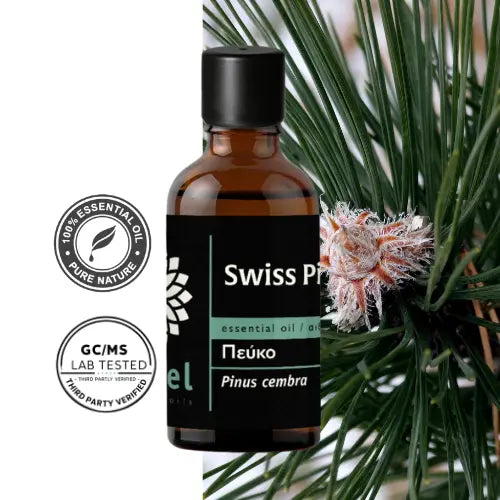
Swiss Pine (Pinus cembra) essential oil – natural
Swiss Pine (Pinus cembra) essential oil – natural
Couldn't load pickup availability

Swiss pine (Austria) essential oil has a fresh, distinctive alpine pine profile. It is an oil that supports clarity, free breathing, and energy recovery – intense, light, and quickly spreads in the air, used in diffusion, inhalation, and massage blends after exertion – recommended when freshness, space, and contact with nature are needed. It is the best choice for those seeking the natural aroma of an alpine forest – distinctly piney, yet less sharp and more multifaceted.
Swiss Pine Essential Oil (Pinus cembra)
Swiss Pine Essential Oil from Austria – Rich in α-Pinene, β-Pinene, β-Phellandrene, and Limonene
Swiss pine essential oil, also known as Arolla pine, has a fresh, intensely forest-like aroma with notes of pine needles, resin, and dry wood. The initial impression is bright and invigorating, but the scent gradually develops more balsamic, green, and subtly citrusy tones.
It is obtained by steam distillation from wild-harvested twigs and needles of Pinus cembra growing in Austria. Swiss pine is a characteristic species of high-altitude areas in Europe. Its oil differs from classic Scotch pine – it has a clean, spacious profile where the resinous freshness of pinenes combines with brighter notes of limonene and β-phellandrene.
Batch E1001723 from Austria contains 34.39% α-pinene, 14.18% β-pinene, 10.87% β-phellandrene, and 10.73% limonene. α-Pinene and β-pinene together constitute 48.57% of the identified profile, forming its distinctly piney, resinous core. β-Phellandrene and limonene – a total of 21.60% – contribute freshness, a subtle citrusy brightness, and a sensation of clean, mountain air.
This oil is dominated by monoterpene hydrocarbons – light, volatile, and intensely aromatic compounds. As a result, it quickly fills a space and works well in refreshing compositions, supporting concentration and respiratory comfort.
Swiss pine does not act through heavy sedation. Its aromatherapeutic profile is rather associated with mental refreshment, organizing thoughts, and restoring a sense of space after periods of fatigue or being in enclosed spaces. At the same time, the natural aroma of the forest can promote emotional grounding and reconnecting with one's own rhythm.
Product Properties
- Country of origin: Austria
- Plant part: twigs and needles
- Cultivation: wild-harvested
- Organic compound groups: Monoterpenes
- Botanical family: Pinaceae
- Botanical name: Pinus cembra
- INCI: Pinus Cembra Twig Leaf Oil
- Extraction method: steam distillation
Therapeutic Properties
Nervous system and emotions
- supports clarity of thought and concentration
- refreshes during mental fatigue and feelings of overload
- helps create an atmosphere of space, freshness, and inner order
- may support energy recovery after periods of low motivation
- promotes emotional grounding without a heavy sedative effect
- brings the atmosphere of a forest and contact with nature indoors
Body support
- supports comfort and a feeling of freer breathing
- works well in diffusion during periods of increased respiratory system strain
- can be used in diluted massage blends for tired muscles
- refreshes the body after exertion and prolonged static positions
- suitable for energizing massage oils and aromatic baths
- supports a feeling of freshness in foot and body care
GC/MS Analysis
Chemical structure – key components
- α-Pinene – 34.39% – monoterpene
- β-Pinene – 14.18% – monoterpene
- β-Phellandrene – 10.87% – monoterpene
- Limonene – 10.73% – monoterpene
- δ-3-Carene – 8.26% – monoterpene
- β-Myrcene – 6.74% – monoterpene
- β-Caryophyllene – 4.04% – sesquiterpene
- p-Cymene – 2.58% – monoterpene
- Terpinolene – 1.43% – monoterpene
- Camphene – 0.81% – monoterpene
Pinene profile
α-Pinene and β-pinene form the basis of the oil's chemical profile. Together, they constitute 48.57% of the components. They are responsible for the distinctive aroma of fresh pine needles, resin, and dry wood, as well as the quickly perceptible refreshing effect in a space.
In aromatherapy, oils rich in pinenes are used in compositions that support clarity, concentration, and respiratory comfort. The high content of α-pinene gives Swiss pine a distinct, forest-like character, but the presence of β-pinene, limonene, and β-phellandrene makes the scent not one-dimensional or exclusively sharp.
β-Phellandrene and limonene
β-Phellandrene and limonene together constitute 21.60% of the identified profile. They create a brighter, more luminous part of the aroma – fresh, subtly citrusy, and reminiscent of sun-warmed pine needles.
Limonene brings lightness and energizing freshness to the composition, while β-phellandrene develops green, piney, and delicately citrusy nuances. Their presence distinguishes Swiss pine oil from heavier, more balsamic coniferous oils.
δ-3-Carene, β-myrcene and other monoterpenes
δ-3-Carene and β-myrcene deepen the forest character of the oil. They impart green, dry, and subtly sweet tones that balance the sharpness of pinenes. p-Cymene, terpinolene, and camphene complete the profile with subtle aromatic, resinous, and fresh accents.
β-Caryophyllene
β-Caryophyllene is a sesquiterpene that contributes a drier, woodier, and slightly spicy background. Its presence can increase the depth of the aroma and prevent the oil from dissipating as quickly in a composition as a profile composed exclusively of light monoterpenes.
Overall profile character
The predominance of monoterpene hydrocarbons makes the oil intense, light, and quick to spread in the air. It is particularly suitable for fresh forest, respiratory, and energizing compositions. At the same time, such a profile requires careful storage, as monoterpenes gradually oxidize under the influence of light, oxygen, and heat.
Scent Profile
- Aroma: fresh, forest-like, resinous, balsamic, green, subtly citrusy
- Color: colorless to pale yellow
- Consistency: light, fluid
- Scent note: top transitioning to heart note
Application
Diffusion – freshness and mountain forest atmosphere
Add the oil to a diffuser according to the device's instructions. Use alone or in combination with other coniferous, citrus, and resinous oils to create a fresh, spacious atmosphere reminiscent of a walk in an alpine forest.
Inhalation – clarity and respiratory comfort
Apply the oil to a personal inhaler wick or use in a short indirect inhalation. The aroma of Swiss pine will be beneficial for fatigue, reduced concentration, and the need for refreshment. Do not apply undiluted oil directly to the nose or mucous membranes.
Post-workout massage
Combine with a carrier oil and use for massaging tired muscles, back, or feet. For daily body use, a 1-2% dilution is usually appropriate.
Forest regenerative ritual
Combine Swiss pine with fir, juniper, or cedar and use in a diffuser during rest, breathing exercises, or work requiring concentration. The composition helps create an atmosphere of space and contact with nature without a heavy sedative effect.
Safety
Safety and warnings:
- Use on skin only after dilution.
- Do not apply directly to open wounds or damaged skin.
- Avoid contact with eyes, inside the nose, and mucous membranes.
- Before first use, perform a patch test on a small area of skin.
- The oil is not phototoxic.
- Oxidized oil may increase the risk of irritation and allergic reactions.
- During pregnancy, breastfeeding, and for use in children, consultation with a specialist is recommended.
- Individuals with respiratory hypersensitivity should start diffusion with a small amount of oil.
- Do not use internally.
In proper dilution, Swiss pine essential oil is generally well tolerated. Due to the high content of easily oxidizing monoterpenes, it is especially important to store it in a tightly sealed bottle.
Storage and Shelf Life
Shelf life: 5 years from production date
Store in a tightly sealed bottle, in a cool, dark place, away from sunlight, humidity, and heat sources. Close the packaging tightly after each use to limit oxygen access. After opening, regularly check the aroma, color, and consistency of the oil.
Blends for Swiss Pine Essential Oil
Siberian Fir – softens the dry profile of Swiss pine and gives the composition a more balsamic character
Juniper Berry – enhances the sense of purity, space, and cool forest air
Himalayan Cedarwood – deepens the composition and adds a stable, woody base
Frankincense – combines pine freshness with balsamic, resinous depth
Lavender – softens the sharpness of pinenes and creates a more harmonious composition for evening relaxation
Lemon – highlights the limonene freshness and strengthens the bright, energizing character of the oil
Why is Swiss Pine Essential Oil Unique?
The uniqueness of Swiss pine oil is determined not only by its Austrian origin and wild harvest but also by the characteristic balance of its main monoterpenes.
As much as 48.57% of the identified profile is composed of α-pinene and β-pinene – compounds responsible for the clean aroma of fresh pine needles, resin, and mountain forest. α-Pinene gives the oil its distinctiveness and intensity, while β-pinene develops greener, drier, and woodier nuances.
The second important part of the profile is β-phellandrene and limonene – a total of 21.60%. These are what give the composition luminosity, a subtly citrusy character, and a sense of open space. Thanks to this, the oil does not smell like heavy, one-dimensional turpentine – it remains fresh, vibrant, and spacious.
The profile is complemented by δ-3-carene and β-myrcene, which contribute green, dry, and subtly sweet tones. If the presence of 4.04% β-caryophyllene is confirmed in the corrected report, it will additionally be responsible for a subtle, woody-spicy background.
Swiss pine essential oil is not simply another "pine oil." It represents a specific species – Pinus cembra – and a characteristic alpine raw material profile. Its value comes from the combination of wild harvest, Austrian origin, and a multifaceted arrangement of pinenes, β-phellandrene, limonene, and other monoterpenes.
How does Swiss pine essential oil differ from other pine essential oils?
Swiss pine, Scotch pine, and black pine essential oils belong to the same aromatic family. All are rich in volatile monoterpenes and can be used in compositions that support freshness, concentration, respiratory comfort, and post-exertion recovery. However, they differ in the proportions of key components, and thus in intensity and scent character.
Swiss Pine Essential Oil (Pinus cembra) – the most diverse profile
The batch from Austria contains 34.39% α-pinene, 14.18% β-pinene, 10.87% β-phellandrene, 10.73% limonene, 8.26% δ-3-carene, and 6.74% β-myrcene.
α-Pinene does not dominate as strongly as in the other compared oils. It is accompanied by significant amounts of β-pinene, limonene, β-phellandrene, δ-3-carene, and β-myrcene. Thanks to this, the aroma is more multifaceted – still distinctly piney and resinous, but also green, spacious, and subtly citrusy.
Swiss pine will work best in compositions intended to evoke a natural, mountain forest. It is suitable for people who are looking for a fresh pine oil but do not want an aroma dominated by the sharp, turpentine-like note of α-pinene.
Scotch Pine Essential Oil (Pinus sylvestris) – classic pine profile
This is the most classic and universal pine profile: fresh, dry, resinous, and unequivocally associated with pine needles. The higher content of α-pinene makes the aroma more direct and intense than with Swiss pine, while δ-3-carene gives it a subtly sweet, warm, and woody depth.
Scotch pine will be a good choice for traditional respiratory, refreshing, forest, and post-exertion massage blends. It is the most recognizable and versatile of the compared oils.
Black Pine Essential Oil (Pinus nigra) – most concentrated in α-pinene
Black pine contains as much as 82.08% α-pinene. Such a strong dominance of a single compound gives the oil a distinct, penetrating, and very resinous character. Among the three compared oils, black pine is the strongest, most raw, and most direct.
It will work best where an intense, decidedly piney accent is needed – in energizing, refreshing compositions that support concentration. However, it may be too sharp for people who prefer milder, more complex coniferous oils.
Ponderosa Pine Essential Oil (Pinus ponderosa) – warmer, more balsamic than other pine oils, and most enveloping
Ponderosa pine oil from the USA contains 28.74% α-pinene, 21.43% β-pinene, 14.33% δ-3-carene, 8.41% limonene, and the presence of 5.06% bornyl acetate gives it a milder, citrus-resinous, and enveloping aroma, reminiscent of a sun-warmed forest.
Ponderosa will work best in relaxing, forest, and regenerating compositions where the freshness of pine is to be combined with a sense of warmth and security.
The most important difference
- Swiss Pine – most complex, spacious, green, and subtly citrusy
- Scotch Pine – classic, fresh, dry, and universally piney
- Black Pine – most intense, penetrating, and dominated by α-pinene
- Ponderosa Pine – warm, woody, citrus-balsamic, and most enveloping; reminiscent of a sun-drenched forest
Batch Information
- Production date: August 2024
- Expiration date: August 2029
- Country of origin: Austria
- Batch number: E1001723
MSDS laboratory documentation + GC-MS analysis
Quality Guarantee – GC/MS and GC/FID Tests
Vessel brand essential oils are tested using GC/MS and GC/FID methods, confirming their authenticity, purity, and compliance with the plant's natural profile.
The analysis utilizes gas chromatography coupled with mass spectrometry (GC/MS) in SCAN mode to precisely identify each component. Quantitative composition is determined by GC/FID. This ensures that we offer only natural oils, without synthetic additives – ideal for professional aromatherapy applications.
(INCI: Pinus Cembra Twig Leaf Oil)


How do I know this oil is better?
You are buying more than a scent. You are choosing purity, quality, and certainty about what enters your home. Choose an oil whose ingredients you truly know.
Discover our oils| AromaPremium Oils | Products without full transparency | |
|---|---|---|
| Confirmed purity | ||
| 100% natural ingredients | ||
| No artificial additives | ||
| Undiluted product | ||
| Known origin of plants | ||
| Product freshness | ||
| The quality of each batch | ||
| Full transparency | ||
| Greater purchasing confidence |

Your trust is very important to us
To ensure full quality transparency, we provide GC/MS reports for each oil.
GC/MS tests confirm the purity and authentic chemical composition of the oils , so you can be sure that you are using the highest quality products.
To view the GC/MS report for a given oil, simply click the PDF available on the product page. We publish GC/MS reports for individual oil batches one by one.
For each oil, we have also prepared a graphical summary of the composition in the form of a pie chart , which makes it easier to understand the chemical profile of the batch.
⚖️ Aromatherapy quality
Aromatherapy AI Assistant

Original products sourced from verified suppliers
Choose authentic essential oils – avoid unverified or unknown sources

Customer satisfaction is our priority