Organic Frankincense Hydrosol or Essential Oil
For a one-time purchase of products from the Essential Oils category for a minimum of EUR 205, you will receive a unique gift for EUR 1
Collection: Compact Aroma Diffusers
Compact diffusers – aromatherapy at home, in the office and on the go
Compact diffusers are small devices that offer effective, subtle diffusion wherever you need it. A portable aromatherapy diffuser or travel diffuser allows you to create a soothing atmosphere on your desk, in your bedroom, in a hotel room, or in your car.
An alternative to fragrance sticks
A modern alternative to fragrance sticks , each model functions as an essential oil diffuser , ensuring even aroma release without smoke or soot. Unlike reeds, compact diffusers allow you to control the fragrance intensity and are reusable.
Wireless diffuser – mobility and convenience
If you're looking for a cost-effective solution for smaller spaces, choose a compact, cordless aroma diffuser . Battery or USB power allows for complete portability – use it anywhere without needing access to a power outlet.
Discover compact diffusers – aromatherapy always at hand, wherever you are.
-
Yoyo Gold Exclusive Personal Essential Oil Aroma Diffuser
Regular price From 81,00 zł PLNRegular priceSale price From 81,00 zł PLN -
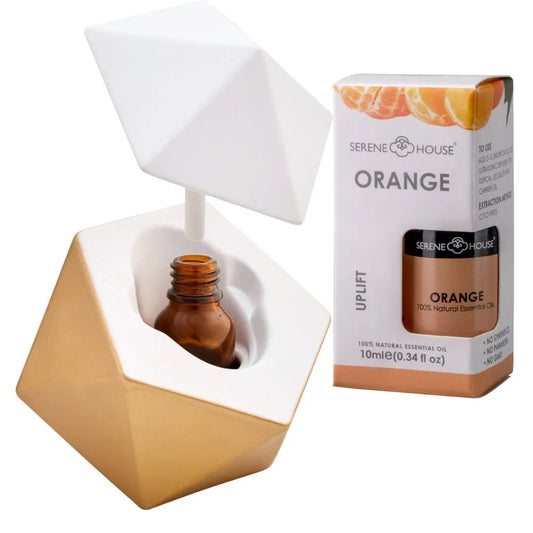
Vail Passive Ceramic Diffuser - An Alternative to Fragrance Sticks
Regular price From 45,00 zł PLNRegular priceSale price From 45,00 zł PLN -
Josephine Passive Ceramic Diffuser – An Alternative to Fragrance Sticks
Regular price From 85,00 zł PLNRegular priceSale price From 85,00 zł PLNSold out
Essential oils for aromatherapy – Q&A
FAQ
Which essential oils are best for aromatherapy?
The best essential oils for aromatherapy are products with confirmed botanical identity, known origin, and documented chemical composition, selected for a specific application and individual scent preferences.
There is no single oil that is best for everyone. They differ in chemical profile, aroma intensity, volatility, and usage restrictions.
For example, citrus oils, usually rich in limonene, are characterized by a fresh scent, while woody and resinous oils, containing sesquiterpenes among other compounds, give compositions a deeper, balsamic character.
When choosing natural essential oils, it is worth paying attention not only to the scent but also to the botanical name, chemotype – if relevant – and the GC/MS analysis of the specific batch.
How to recognize a genuine essential oil and distinguish it from a fake?
A genuine essential oil should be derived from the specified plant material and correspond to its characteristic chemical profile. The label "100% natural" alone does not prove the product's authenticity.
An oil can be adulterated by adding cheaper aromatic substances, diluting it with a carrier oil, or replacing some ingredients with synthetic counterparts. Such practices are known as adulteration.
Verification should begin by checking the botanical name, plant part, extraction method, country of origin, and batch number.
An essential analytical tool is GC/MS – gas chromatography-mass spectrometry, which allows for the identification of many volatile components of an oil and the comparison of its profile with the characteristics of the declared raw material.
However, GC/MS does not detect every possible adulteration. In more difficult cases, additional analytical methods are required.
Popular home tests, such as placing a drop of oil on paper, are not a reliable way to confirm its purity.
What is the difference between an essential oil and a fragrance oil?
An essential oil is a natural plant-based raw material, whereas a fragrance oil is a prepared composition of aromatic substances. It may contain natural ingredients, synthetic ones, or both groups.
An essential oil has a chemical profile characteristic of the plant species, which may vary depending on the variety, growing conditions, origin of the raw material, and the extraction process.
A fragrance composition, on the other hand, can combine natural essential oils, natural isolates, and synthetic aromatic substances. This is how scents inspired by perfumes, hotels, or specific fragrance accords are created.
In aromatherapy based on natural plant raw materials, essential oils are used, not synthetic fragrance oils. Fragrance compositions are primarily used for scenting interiors, provided they are intended for the chosen device.
The presence of diluents is also important. A composition based on volatile fragrance ingredients may be suitable for a specific nebulizer, while a product containing heavy vegetable oils may disrupt the device's operation.
Therefore, when choosing oils for a fragrance diffuser, one should pay attention not only to the scent but also to the composition and recommended use.
Is inhaling essential oils healthy?
Inhaling essential oils can be a part of aromatherapy and promote a subjective sense of comfort.
Essential oils contain volatile organic compounds (VOCs) which, once released into the air, can be inhaled. Some components may also react with substances present in the air, including ozone, to form secondary reaction products.
Whether the exposure is well tolerated depends, among other factors, on the type of oil, its concentration, room ventilation, duration of diffusion, and individual sensitivity.
A fundamental principle of toxicology is essential: risk depends on the properties of the substance as well as the magnitude and route of exposure.
Sensible aromatherapy means, above all, making an informed choice of product, using moderate intensity, and observing one's own reaction to the scent.
Are essential oils from a diffuser safe?
Essential oil diffusion can be well tolerated, but it is not entirely without risk. The concentration of fragrance substances, the operating time of the device, and the size and ventilation of the room are of particular importance.
In an ultrasonic diffuser designed for use with oils, water and oil are dispersed as a mist. A waterless nebulizer sprays the aromatic liquid without adding water.
No technology makes every oil safe for all users.
Intensive or prolonged aromatherapy can cause headaches, coughing, nausea, or respiratory irritation. If such symptoms occur, stop the diffusion and ventilate the room.
The most important rule is moderate exposure, not maximum fragrance intensity.
Why does the essential oil stop smelling quickly in the diffuser?
Changes in aroma intensity are influenced by, among other factors, differences in the volatility of individual components and olfactory adaptation.
Essential oils are not single substances, but mixtures of compounds with varying physicochemical properties.
Monoterpenes, such as limonene or α-pinene, are generally more volatile than many sesquiterpenes. For this reason, citrus aromas often develop quickly, while some woody and resinous scents have a more subdued character.
The substance's odor threshold, temperature, ventilation, and the design of the diffuser also play a role.
A rapid weakening of the perceived scent is not in itself evidence of poor oil quality. It may result from its natural chemical characteristics or the habituation of the olfactory system.
Where can I buy high-quality natural essential oils for aromatherapy?
It is worth buying high-quality natural essential oils for aromatherapy from a supplier that provides transparent information about the origin, botanical identity, and chemical composition of the products.
When selecting products, we pay attention to the identification of raw materials, their chemical characteristics, and quality documentation, including GC/MS analyses of individual batches.
What are natural essential oils and how do they work in aromatherapy?
Natural essential oils are complex mixtures of volatile organic compounds produced by plants. They are most commonly obtained via steam distillation, and in the case of many citrus fruits, through mechanical pressing of the peels.
Their composition primarily consists of terpenes and terpenoids, including monoterpenes, sesquiterpenes, and oxygenated compounds such as alcohols, esters, aldehydes, ketones, and oxides.
For example:
- Linalool and linalyl acetate – characteristic components of lavender oil (Lavandula angustifolia), contributing to its floral-herbal aroma.
- Limonene – the main component of many citrus oils, responsible for their characteristic freshness.
- 1,8-cineole (eucalyptol) – a compound found in significant amounts in select eucalyptus oils, giving them a fresh, penetrating character.
- β-caryophyllene – a sesquiterpene present in, among others, copaiba and black pepper, associated with their woody-spicy profile.
In aromatherapy, the sense of smell is of particular importance. Volatile molecules reach the olfactory epithelium, where they stimulate specific receptors. The signals are then processed by the nervous system, including structures involved in the perception of scents, memory, and emotions.
Therefore, fragrance can influence subjective mood, associations, and a sense of comfort.
What are the best natural essential oils?
There is no single objectively "healthiest" or "best" essential oil for all users.
The choice depends on fragrance preferences, intended use, individual sensitivity, and the chemical characteristics of the oil.
Popular categories include:
- Citrus oils – sweet orange, mandarin, lemon, and bergamot. They are characterized by fresh, light aromas.
- Floral and herbal oils – lavender, geranium, and palmarosa. They offer a wide range of scents, from delicate to intensely green.
- Woody oils – cedarwood and sandalwood. They add warmth and depth to compositions.
- Resinous and balsamic oils – frankincense and copaiba. They are valued for their calm, warm, and often more subtle fragrance profile.
- Fresh and penetrating oils – peppermint, eucalyptus, and rosemary. Due to their intensity and composition, they require particularly careful selection.
It is best to start with aromas that are pleasant to the senses, and then gradually explore more complex scent profiles.
How many drops of essential oil should I add to the diffuser?
There is no universal number of drops suitable for all diffusers.
In ultrasonic diffusers, the amount of oil depends on the tank capacity, the type of oil, and the device design.
It is also important to note that a drop is not a precise unit of measurement. Its volume can vary depending on the type of dropper, as well as the viscosity and surface tension of the liquid.
You should not increase the amount of oil solely to achieve a more intense fragrance.
In waterless nebulizers, water is not added, and oil is not measured in drops. The device draws the appropriate liquid from the container, and the intensity of the aroma is controlled via its settings.
⚖️ Essential oils for diffuser
Each essential oil has a GC/MS report confirming its chemical composition and batch purity. These are full-spectrum oils – without isolates, admixtures, or artificial fragrance additives. The report assigned to a specific batch ensures full product traceability.
֎ Virtual Aromatherapy Assistant
Meet your virtual assistant ˙✧˖GPT, here to support you in the world of scents and natural rituals. The conversation is confidential and completely secure – only you have access.