



Destylarnia Vessel
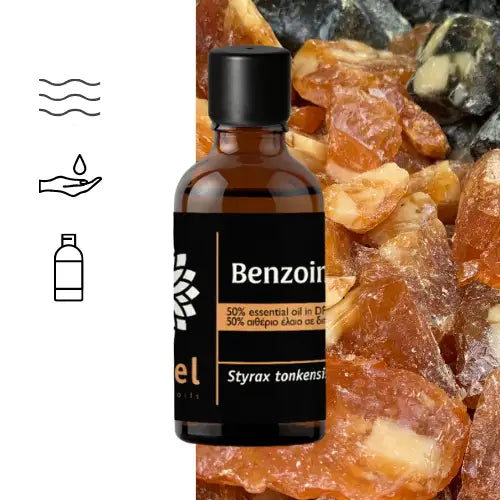
Benzoin benzoin (Styrax tonkinensis) resin oil 50% in DPG natural
Benzoin benzoin (Styrax tonkinensis) resin oil 50% in DPG natural
Couldn't load pickup availability

Benzoin is a warm, balsamic resinoid essential oil that promotes deep calm, a sense of security, and emotional comfort, making it ideal for relaxation blends. Additionally, it has protective and regenerating effects on the skin, making it suitable for skincare compositions and as a natural fragrance fixative. This is a premium product – for professional aromatherapy and perfumery. It stands out for its purity, elegant fragrance, and high benzoic acid content.
Benzoin Essential Oil (Styrax tonkinensis)
Natural Benzoin Resinoid Oil 50% in DPG – Siamese Benzoin from Laos
Natural benzoin oil is obtained from the balsamic resin of Styrax trees (benzoin resin extract). Although commonly classified as an essential oil, Benzoin is actually a natural extract from the resin of the Styrax tonkinensis tree (known as "Siamese benzoin"), dissolved in DPG, which allows it to remain in liquid form (with increased viscosity) and easily blend with other oils. DPG (Dipropylene Glycol) is odorless, does not alter the composition, and simultaneously improves durability and safety of use.
Benzoin oil (Styrax tonkinensis) is distinguished by its unique chemical composition – rich in aromatic acids and esters – which translates into its balsamic scent and preservative properties. Due to its antiseptic, anti-inflammatory, and regenerating properties, it is used in skin care products, expectorant blends, and relaxation compositions. Laotian Styrax tonkinensis is a premium product, offering a brighter, "vanilla-musky" tone than darker varieties from Sumatra or Siam.
Product Properties
- Country of origin: Laos
- Part of plant: Resin
- Cultivation: Wild harvest
- Organic compound groups: Carboxylic acids, esters, ethers
- Botanical family: Styrax tonkinensis
- Extraction method: Resin extraction dissolved in DPG (50%)
Therapeutic Properties
- Antiseptic and anti-inflammatory
- Regenerating and soothing for the skin
- Expectorant and respiratory support
- Relaxing and emotionally calming
- Preservative and fragrance fixative
- Supports emotional expression (throat chakra)
Scent Profile
- Aroma: balsamic, vanilla, sweet-woody
- Scent classification: base note
- Appearance: viscous liquid
- Color: brown; amber; reddish
Chemical Profile – Dominant Components
- Benzoic acid – 67.18% (carboxylic acid) – main carrier of the "balsamic" accord
- Coniferyl ethyl ether – 7.12% (ether) – sweet-woody background
- 3-(4-Hydroxy-3-ethoxyphenyl)-2-oxopropyl benzoate – 3.34% (ester)
- Benzyl benzoate – 2.65% (ester) – warm, fixative base
- Vanillin – 2.56% (aromatic aldehyde) – vanilla accent
Chemical Profile - Explanation
- Benzoic acid – 67.18% is a high result.
For comparison: many commercial extracts (especially "Benzoin resinoid" from Thailand) have approx. 40–55% benzoic acid and a higher proportion of heavier tarry fractions.
This result indicates a purely distilled material with fewer residues, which translates into a smoother, less "smoky" scent. - Vanillin (2.56%) and benzyl benzoate (2.65%) – their presence in a proportion close to natural profiles (3–4%) indicates authenticity and lack of synthetic enhancement.
In cheap extracts, synthetic vanillin is often added, causing GC/MS to show an unnatural 1:10 ratio. This batch lacks synthetic enhancers.
Applications
Skin care
Benzoin helps regenerate skin and soothe irritation. Laboratoire Altho recommends combining it with jojoba oil for problematic skin care or with calendula oil to soothe irritations. You can also add 1 drop of oil to 10 ml of unscented lotion or carrier oil.
Respiratory preparations
Due to its expectorant properties, the oil is used in chest massage blends, herbal syrups, and steam inhalations for coughs and colds.
Relaxation and emotional support
In diffusion or aromatic inhalation, it helps relieve stress, anxiety, and promote rest. According to energetic aromatherapy, it is associated with the throat chakra and helps in expressing emotions.
Perfumery and room fragrance
Benzoin has a thick consistency and fixative properties. Its balsamic, vanilla scent makes an excellent base note in perfumes and aromas. Use it as a room fragrance; due to its sticky, thick consistency, use an electric aroma diffuser.
Safety
Safety and warnings:
- Concentration: Robert Tisserand and Rodney Young rate the risk of sensitization as low, but recommend a maximum skin application concentration of 2%.
- Sensitive skin: The oil may cause irritation in people with sensitive skin; a patch test on the elbow crease is recommended before use.
- Infants and pregnant women: Due to the presence of strong aromatic compounds, it is not recommended for children under 3 years of age, or for pregnant and breastfeeding women.
- Phototoxicity: Although benzoin is not phototoxic, the aldehydes it contains can increase skin sensitivity; do not apply it to the skin just before sun exposure.
- Dilution: Do not use the oil neat – always dilute in a carrier oil.
Storage and Shelf Life
Shelf life: 5 years
Store in a dark, cool place, away from sunlight.
Benzoin Oil Blends
With flowers:
- Jasmine, neroli, ylang-ylang
With citrus fruits:
- Sweet orange, tangerine, bergamot
With resins:
- Frankincense, myrrh
With woody oils:
- Sandalwood, cedar, vetiver
Batch Information
- Production date: August 2024
- Expiration date: August 2029
- Batch No: E1001628
Quality Guarantee – GC/MS and GC/FID Tests
Vessel essential oils are tested using GC/MS and GC/FID methods, confirming their authenticity, purity, and compliance with the natural plant profile.
The analysis uses gas chromatography combined with mass spectrometry (GC/MS) in SCAN mode to precisely identify each component. Quantitative composition is determined by GC/FID. This ensures that we offer only natural oils, without synthetic additives – ideal for professional aromatherapy applications. The distillery specializes in medicinal and aromatic plants (MAP). It operates under standards including ISO 9001/22000 and Organic/COSMOS.
Benzoin essential oil, benzoin essential oil, styrax oil (INCI: Styrax tonkinensis resin extract)


How do I know this oil is better?
You are buying more than a scent. You are choosing purity, quality, and certainty about what enters your home. Choose an oil whose ingredients you truly know.
Discover our oils| AromaPremium Oils | Products without full transparency | |
|---|---|---|
| Confirmed purity | ||
| 100% natural ingredients | ||
| No artificial additives | ||
| Undiluted product | ||
| Known origin of plants | ||
| Product freshness | ||
| The quality of each batch | ||
| Full transparency | ||
| Greater purchasing confidence |

Your trust is very important to us
To ensure full quality transparency, we provide GC/MS reports for each oil.
GC/MS tests confirm the purity and authentic chemical composition of the oils , so you can be sure that you are using the highest quality products.
To view the GC/MS report for a given oil, simply click the PDF available on the product page. We publish GC/MS reports for individual oil batches one by one.
For each oil, we have also prepared a graphical summary of the composition in the form of a pie chart , which makes it easier to understand the chemical profile of the batch.
⚖️ Aromatherapy quality
Aromatherapy AI Assistant

Original products sourced from verified suppliers
Choose authentic essential oils – avoid unverified or unknown sources

Customer satisfaction is our priority