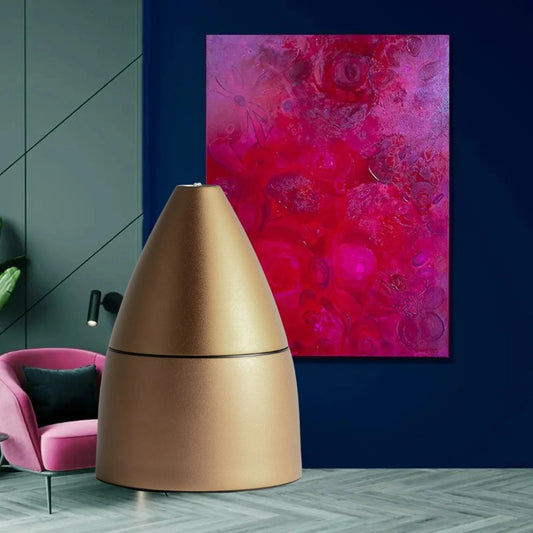
Collection: Aroma Diffusers for Essential Oils

Scent Diffusers – Quality and Modern Technologies

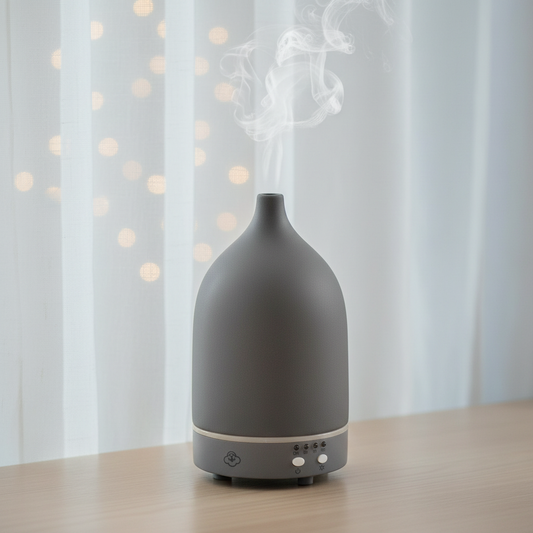
An essential oil diffuser improves indoor air quality, promotes relaxation, and helps create a pleasant atmosphere. Modern scent diffusers are increasingly used in homes and offices as a natural method of aromatizing interiors.

Types of Essential Oil Diffusers

Diffusers allow for the safe and convenient use of essential oils in daily life. People wondering what essential oils can be used for are increasingly choosing:

  • Ultrasonic diffusers – combine aromatherapy with air humidification
  • Waterless diffusers / nebulizers – intensive and pure diffusion without water
  • Diffusers with premium features – timer, LED, Bluetooth, remote control

Our blog shows how to use essential oil at home, emphasizing the role of nebulizers in intensive and pure scent diffusion.

Features of Modern Diffusers

An essential oil diffuser with advanced features combines quality and modern technologies:

  • Timer – programming operating time
  • Automatic shut-off – at low water level
  • LED color changing – atmosphere personalization
  • Remote control – convenient operation
  • Double atomization – wider scent range
  • Built-in Bluetooth speaker – music and aromatherapy

Premium Materials – Design and Elegance

Quality, functionality, and the harmony of technology and design mean you can choose from elegant, professional models in various materials:

  • Glass – elegance and transparency
  • Aluminum – modern design
  • Ceramics – naturalness and warmth
  • Porcelain – luxury and sophistication

Available in various colors and styles – from minimalist to luxurious.

Humidifier Diffuser with Aromatherapy

A high-quality ultrasonic air humidifier, essential oil diffuser – designed for user comfort, combines humidifying function with aromatherapy.

Discover the full collection of scent diffusers – from ultrasonic humidifiers to professional nebulizers.

Twilight Grey szklany dyfuzor ultradźwiękowy z timerem i rotacyjnym podświetleniem LED

29 products

Najczęściej zadawane pytania

Home fragrance diffusers – frequently asked questions

What is an aroma diffuser and what is it used for?

A fragrance diffuser is a device used to disperse aromatic substances into the air. In home aromatherapy, ultrasonic diffusers are most commonly used; they atomize water mixed with essential oils, creating a delicate, cool fragrant mist. Their operation is based on high-frequency mechanical vibrations.

An essential oil diffuser allows you to bring natural plant aromas into your home and create an atmosphere conducive to rest or daily relaxation rituals.

How does an ultrasonic essential oil diffuser work?

The ultrasonic diffuser uses a high-frequency vibrating piezoelectric membrane that disperses water and added essential oil in the form of fine aerosol droplets.

The membrane is electrically stimulated and performs very rapid mechanical vibrations. The energy transferred to the liquid causes a mist to form, which then escapes from the device.

The process does not require boiling water. Therefore, the visible white mist is not water vapor generated during boiling, but an aerosol of liquid droplets.

This is significant for essential oils, as their components are not directly subjected to the high temperatures characteristic of heating or burning.

However, this does not mean that the entire chemical composition of the oil remains unchanged. Individual compounds have varying volatility and stability, and the way they are released depends on the diffusion conditions.

Which essential oil diffuser is best for the home?

The best home fragrance diffuser is a device selected based on the size of the room, the desired intensity of the aroma, the operating time, and the method of use.

When choosing, it is worth considering:

  • Aromatization area – consistent with the range declared for a specific model.
  • Tank capacity – which affects the device's potential operating time.
  • Intermittent mode and timer – which make it easier to control scent exposure.
  • Automatic shut-off – which protects the device from running with low water levels, if the model has this feature.
  • Ease of cleaning – especially access to the tank and ultrasonic membrane.
  • Housing material – glass, ceramic, or other materials used in the device's construction.

For smaller rooms, a compact model is usually sufficient, while for a larger living room, it is worth considering a device with a larger tank and appropriate mist output.

AromaPremium offers home ultrasonic diffusers, including glass and ceramic models, with timers, LED lighting, and various tank capacities.

What are the types of fragrance diffusers and how do they differ?

There are several aromatization technologies on the market that differ in how they release fragrance substances.

Ultrasonic diffusers use water and the vibrations of a piezoelectric membrane. They produce a cool mist, which is why they can simultaneously introduce small amounts of moisture into the air.

Waterless nebulizers atomize specific oils or fragrance compositions without the addition of water. Their design and method of regulation differ from those of ultrasonic diffusers.

Evaporative diffusers use the natural evaporation of aromatic substances from a cartridge or another surface. In some models, the process is assisted by a fan.

Heat diffusers accelerate the release of fragrance by heating the aromatic substances.

For daily, moderate home aromatization, ultrasonic diffusers are often chosen due to their quiet operation, the ability to adjust operating time, and the lack of a need for an open flame.

Which diffuser is the healthiest – ultrasonic or waterless?

There is no scientific basis for deeming one type of diffuser the healthiest for all users. Safety depends primarily on the substance being diffused, its concentration in the air, exposure time, ventilation, and individual sensitivity.

An ultrasonic diffuser disperses water droplets along with the components of the added oil. A waterless nebulizer does not require water, but may release a more concentrated aromatic aerosol, depending on the device's design and settings.

In the case of ultrasonic technology, the hygiene of the reservoir is of additional importance. Neglected water can become a source of microorganisms, and water with high mineral content promotes the formation of deposits.

Therefore, safe aromatherapy is not solely about the choice of technology. Proper maintenance, appropriate oil dosage, and avoiding excessive exposure are essential.

How can I make the whole house smell nice?

To ensure the fragrance spreads evenly throughout the house, you must consider the surface area of the rooms, the layout of the interior, ventilation, and the placement of the devices.

A single small ultrasonic diffuser will not always provide a noticeable aroma in several separate rooms.

The best results are achieved by properly matching the device to the room and consciously selecting the character of the fragrance.

In the living room, fresh citrus, floral, or woody notes work well, whereas more subdued compositions are often chosen for relaxation spaces.

The diffuser should be used to create a pleasant atmosphere, not to mask air pollutants.

Is an aroma diffuser safe for children?

The safety of diffusion in the presence of children depends on the child's age, the type of oil, the intensity of the scenting, and the room conditions.

Not all essential oils are suitable for small children. Particular caution is required with products rich in menthol, camphor, and 1,8-cineole, especially around infants and very young children.

The natural origin of an oil does not automatically mean it is safe for children.

Intensive diffusion should not be conducted in the immediate vicinity of infants. For children with asthma, allergies, or other respiratory conditions, it is advisable to consult a doctor before using aromatherapy.

You should also choose stable devices that are protected against tipping over and placed out of the reach of children.

Does an ultrasonic diffuser humidify the air?

An ultrasonic diffuser can increase air humidity because it disperses fine water droplets, but not every model replaces a full-sized humidifier.

The effectiveness of humidification depends primarily on the amount of water emitted per unit of time, the volume of the room, and ventilation.

The tank capacity alone is not enough to assess performance. A device with a 150 ml tank may run longer but emit less mist per hour than another model with higher output.

If the goal is humidity control, it is worth using a hygrometer. Excessive humidity is also undesirable, as it promotes water condensation and mold growth.

Therefore, a fragrance diffuser should be treated primarily as an aromatherapy device, unless the manufacturer provides reliable humidification performance specifications.

Why is the fragrance diffuser not releasing steam or producing mist?

The lack of mist does not always mean the diffuser is broken. The cause may be an incorrect water level, a dirty ultrasonic membrane, mineral deposits, or incorrect assembly of the device.

The piezoelectric membrane must properly transmit vibrations to the water. If its surface is covered with deposits or the device is operating outside the intended fill range, aerosol generation may be impaired.

When checking the device, it is worth:

  1. Turning off the diffuser and disconnecting it from the power supply.
  2. Checking the water level and the correct seating of the lid.
  3. Inspecting the tank and membrane for deposits.
  4. Cleaning the device according to the manufacturer's instructions.
  5. After drying, testing its operation with water only, if the manual allows such a test.

Do not disassemble the electrical system yourself or mechanically scrape the membrane.

Why does the diffuser work, but the essential oil scent cannot be smelled?

A faint scent does not always indicate a malfunction of the diffuser or poor quality of the oil. The cause may be olfactory adaptation, the size of the room, ventilation, or the chemical characteristics of the substance used.

Essential oil components vary in volatility and odor threshold. Citrus oils rich in limonene are often perceived as fresh and rapidly developing, whereas some woody aromas are more subtle.

Additionally, with prolonged exposure to the same scent, the olfactory system gradually reduces the intensity of its perception.

Therefore, increasing the amount of oil is not always the right solution.

It is worth checking whether the diffuser is appropriately sized for the room and working correctly. Shorter diffusion sessions and regular airing of the interior can be helpful.

How to clean an aroma diffuser without damaging the membrane?

Regular cleaning of the ultrasonic diffuser is essential for both the efficiency of the device and the hygiene of the aromatherapy process.

Mineral deposits, oil residues, and impurities from the water can accumulate in the tank.

After use, disconnect the device from the power supply, pour out the remaining water, and gently dry the accessible surfaces. The tank should not be left with stagnant water for an extended period.

With regular use, it is also recommended to perform a more thorough cleaning in accordance with the manufacturer's instructions.

The ultrasonic membrane is a delicate component that requires care. Do not scrub it with a hard brush, scrape it with sharp tools, or get liquid into the electrical components.

Do not operate the diffuser with vinegar, alcohol, or other cleaning agents unless such a procedure is explicitly recommended by the manufacturer.

⚖️ Essential oils for diffuser

Each essential oil has a GC/MS report confirming its chemical composition and batch purity. These are full-spectrum oils – without isolates, admixtures, or artificial fragrance additives. The report assigned to a specific batch ensures full product traceability.

֎ Virtual Aromatherapy Assistant

Meet your virtual assistant ˙✧˖GPT, here to support you in the world of scents and natural rituals. The conversation is confidential and completely secure – only you have access.